About Phosphorized Copper Balls
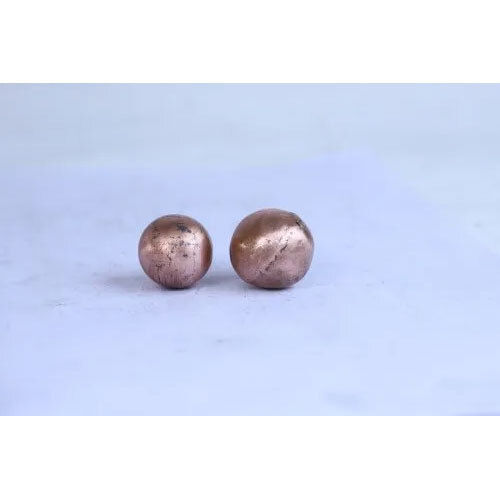
Phosphorized copper balls are specialized copper alloy components containing a small amount of phosphorus, typically between 0.01% and 0.05%. This addition of phosphorus enhances the alloy's properties, making the copper more resistant to oxidation, corrosion, and wear. Phosphorized copper is especially valued for its excellent thermal and electrical conductivity, as well as its ability to withstand high temperatures without significant degradation.
These copper balls are commonly used in various industrial applications, including:
- Metallurgy: As a deoxidizing agent in the production of non-ferrous metals, aiding in the removal of oxygen from molten metals.
- Electronics: For components where high conductivity and corrosion resistance are required, such as connectors and electrical contacts.
- Welding and Brazing: Enhances the quality of joints by reducing oxidation in the weld or braze.
- Machinery and Bearings: Their durability and low friction make them useful in precision mechanical components.
The balls are manufactured with high precision to maintain specific tolerances, sizes, and finishes as needed for these high-performance applications.
Versatile Solution for Industrial ApplicationsPhosphorized Copper Balls are engineered for superior performance in smelting, alloying, electrical, and foundry sectors. Their high purity, robust mechanical strength, and excellent electrical conductivity make them invaluable for processes demanding reliability and quality. Offered in a standard 12 mm diameter, these non-magnetic spheres meet stringent ASTM B379 and IS 191 standards, ensuring consistent results across manufacturing and metallurgical industries in India and beyond.
Exceptional Material PropertiesWith 99.9% pure copper and precisely controlled phosphorus content, these copper balls deliver a unique combination of high hardness (approx. 75 HV), mechanical strength, and corrosion resistance. Their smooth, reddish-brown metallic surface and phosphorized treatment contribute to longevity, making them a cost-effective solution for demanding environments. Their excellent melting point (1083C) and density (8.94 g/cm3) further add to their versatility and performance.
FAQ's of Phosphorized Copper Balls:
Q: How are phosphorized copper balls used in the smelting and alloying processes?
A: Phosphorized copper balls are introduced during the melting stages to deoxidize molten copper, enhancing its mechanical properties and electrical conductivity. The phosphorus content helps bind with oxygen, reducing porosity and improving overall alloy quality in smelting and alloying applications.
Q: What benefits do phosphorized copper balls offer compared to regular copper balls?
A: Phosphorized copper balls provide higher resistance to hydrogen embrittlement, reduced oxidization, and improved mechanical strength due to the presence of phosphorus. This leads to better performance in high-temperature and electrical applications compared to non-phosphorized counterparts.
Q: Where are these copper balls commonly applied in industry?
A: They are widely utilized in the smelting, alloying, electrical, and foundry industries. Their high purity and deoxidized nature make them essential for producing copper alloys, electrical conductors, and in foundry processes requiring consistent, high-performance materials.
Q: What is the process for manufacturing phosphorized copper balls?
A: The production process begins with melting high-purity copper, followed by the controlled addition of phosphorus. The molten alloy is then formed into spherical shapes (typically 12 mm) through specialized casting or rolling techniques, with surface treatment ensuring a smooth, metallic finish and enhanced durability.
Q: When is it ideal to use Cu-DHP grade phosphorized copper balls?
A: Cu-DHP grade phosphorized copper balls are optimal when deoxidization properties, superior electrical conductivity, and high mechanical strength are needed, such as in producing electrical contacts, copper alloys, and various foundry components.
Q: What packing options are available for phosphorized copper balls?
A: These copper balls are typically packed in strong bags or drums, ensuring safe transportation, easy handling, and protection from environmental factors during long-term storage and shipping.
Q: How does the phosphorus content influence the properties of these copper balls?
A: The controlled phosphorus content (0.03% to 0.06%) improves deoxidation, enhances strength, and increases resistance to embrittlement, thus maintaining the copper's high conductivity and making the balls more suitable for demanding industrial applications.







 Send Inquiry
 Send Inquiry
 Send SMS